How to Track Macros for Beginners
Tracking macros means splitting your daily calorie target across protein, carbohydrate and fat, then logging meals against those three numbers instead of one. Convert percentages into grams first: protein and carbohydrate carry 4 calories per gram, fat carries 9. Everything after that is bookkeeping.
What each macro costs
Protein and carbohydrate are both 4 calories per gram. Fat is 9. That ratio is the reason a spoonful of oil moves your total more than a slice of bread, and it is the only arithmetic you need to memorize.
Alcohol sits at 7 calories per gram and belongs to none of the three, which is why it tends to appear in a tracker as calories with no macro attached.
Turn your calorie target into grams
Percentages are how splits get described and grams are how food gets logged, so the conversion has to happen once at the start.
Take a target of 1,988 calories split 40% protein, 24% carbohydrate, 36% fat. Protein is 795 calories, divided by 4, so 198g. Carbohydrate is 477 calories, divided by 4, so 121g. Fat is 716 calories, divided by 9, so 79g. Those three gram figures are what you track against for the rest of the day.
Why a countdown beats a running total
A running total of consumed calories tells you about the past. A countdown tells you what dinner can be, which is the decision you are actually making at six in the evening.
MyPlate counts down on all four numbers at once: calories left, then protein, carbs and fat still available. Seeing 51g of protein left and 10g of fat is a much clearer instruction than a list of what you already ate.
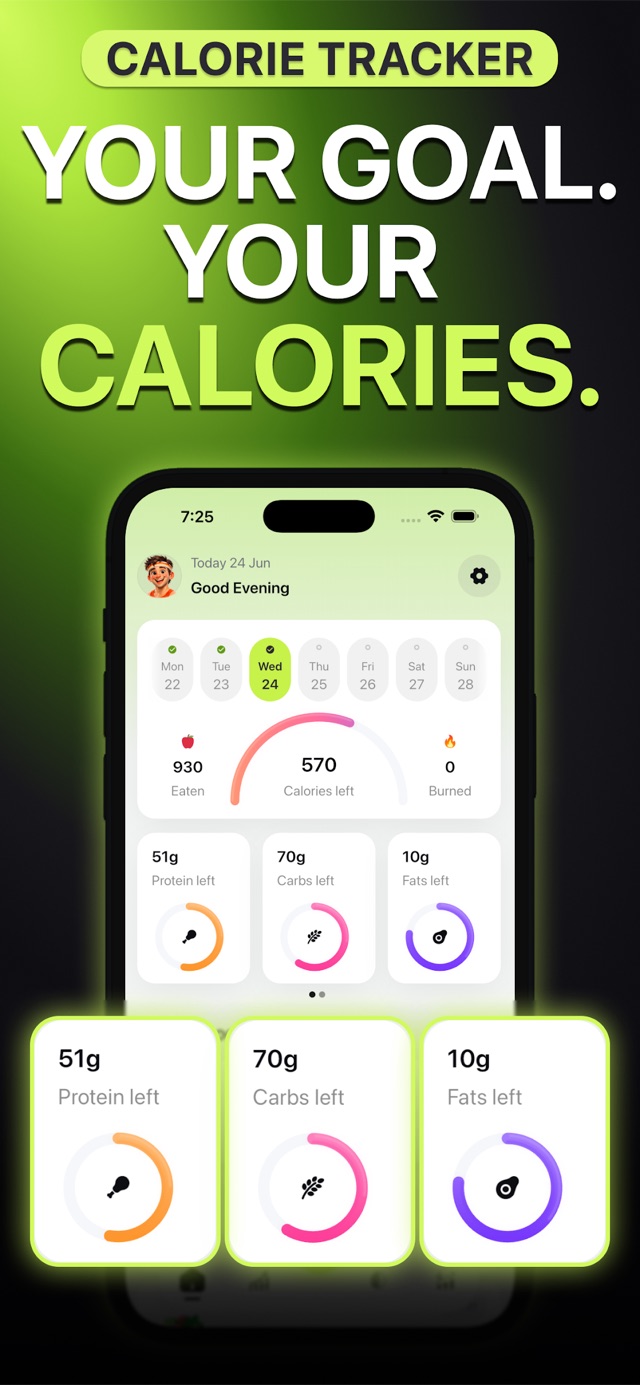
Set your macro targets and track all three against a daily countdown.
Protein is the target people miss
Carbohydrate and fat mostly take care of themselves, because they are abundant in the food people already eat. Protein has to be deliberate, and it is usually the number sitting at 40-something percent when the day ends.
The fix is structural rather than heroic. Put a protein source in every meal instead of trying to rescue the total at dinner, and the daily figure lands without much thought.
Read the week before changing anything
A single day tells you very little. A week shows you the pattern that is actually driving your results.
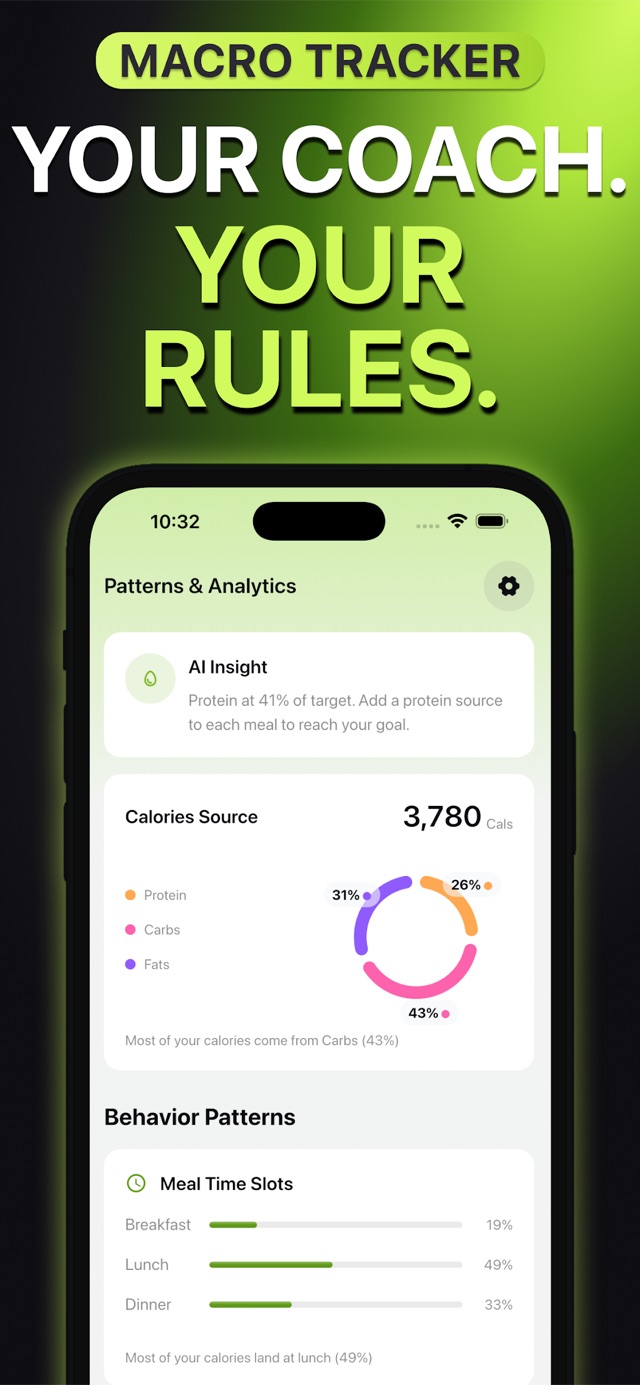
The analytics view breaks the week into where calories came from and when you ate them. Finding that 49% of your intake lands at lunch, or that carbohydrate is running at 43% against a 24% target, points at a specific change. Guessing at your habits usually does not.
Close enough is the goal
Hitting three gram targets exactly is not realistic and not the point. Landing within about 10g of protein and fat, and letting carbohydrate absorb the remainder, gets you essentially the same outcome.
If chasing three numbers is making you log less, drop back to tracking calories and protein only. Two numbers you record every day beat three you record twice a week.
Questions
Do I need to hit my macro targets exactly?
No. Getting within roughly 10g on protein and fat is close enough for the result you are after, and carbohydrate can absorb whatever is left over. Precision on all three every day is a common reason people stop tracking within a month.
Should I track macros or just calories?
Start with calories if you are new to logging, since calories decide whether you gain or lose weight. Add protein once the habit sticks, because protein is what protects muscle while losing weight and keeps you full. Full macro tracking matters most if you are training seriously or eating to a specific plan.
Keep reading
How to Track Calories Without Weighing Food
Track calories without a food scale using hand portions, photo logging and label servings. What each method costs you in accuracy.
How to Calculate Calories in Homemade Food
Add up raw ingredients, divide by servings, and weigh the finished dish for uneven portions. The method, the formula and the shortcut.