How to Track Calories Without Weighing Food
You can track calories without a food scale by estimating portions with your hand, photographing meals, and using the serving sizes printed on labels as anchors. Expect to land within roughly 10 to 15% of the true number, which is close enough to lose weight on, provided you estimate the same way every day.
What you give up without a scale
Weighing food is the most accurate way to log it, and for some people it is also the reason they stop logging by the second week. The scale lives in one kitchen. Lunch usually does not.
The useful question is not whether estimation introduces error. It does. The question is whether the error is small enough and consistent enough that the trend still tells you the truth. Research on self-reported intake keeps finding the same thing: people under-report by around 20%, and the gap is widest for the foods they feel worst about. A consistent 10% estimate beats an accurate log you abandoned.
Use your hand as a portable measure
Your hand scales with your body, which is the point. Bigger people have bigger hands and need more food.
- Palm: one serving of protein, roughly 100g cooked, about 25g of protein
- Cupped hand: one serving of carbohydrate, roughly 100g of cooked rice or pasta
- Thumb: one serving of fat, roughly a tablespoon
- Fist: one serving of vegetables
Photograph the plate instead of measuring it
A photo captures what a written log usually loses: how much was actually there. MyPlate reads the picture and returns the foods it recognizes with calories and macros attached, so a meal takes about as long to log as it takes to pick up your phone.
Shoot from slightly above with the whole plate in frame. The plate edge gives the estimate something to scale against, which is why a tight crop of the food alone is harder to judge.
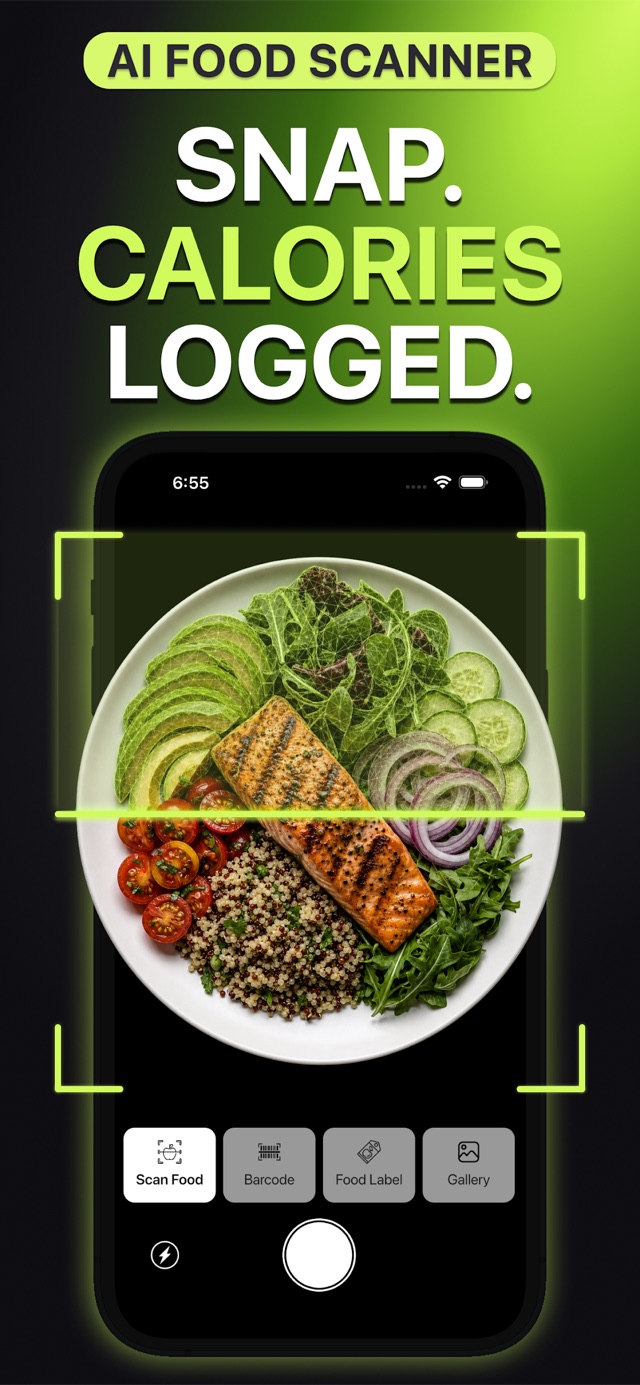
Snap a meal and see the calories and macros come back in a few seconds.
Let labels do the arithmetic for packaged food
Anything with a barcode already has its numbers published. Scanning the barcode or the label pulls them in exactly, so the only estimate left is how many servings you ate.
That reframing matters. "Half a bag of chips" is a guess about weight. "Ten servings of fifteen chips" is a guess about counting, and people are much better at counting.
The fats are where estimates go wrong
Oil, butter and dressing are the biggest source of untracked calories, because they soak in and disappear. A tablespoon of olive oil is about 119 calories. Two tablespoons in a pan, split across a meal for one, is most of a snack.
Log cooking fat as its own entry rather than hoping it was included in the dish you photographed. It is the single habit that closes most of the gap between an estimated log and a weighed one.
Judge the week
One estimated meal can be 200 calories off. Fourteen of them average out, as long as you are not systematically guessing low on the same foods.
If the scale is not moving after two or three weeks of consistent logging, that is the signal to tighten the estimate on a few specific meals, starting with restaurant food and anything cooked in oil.
Questions
Is estimating portions accurate enough to lose weight?
Yes, for most people. Estimation typically lands within 10 to 15% of the weighed value, and a calorie deficit of 500 per day survives that margin comfortably. What breaks weight loss is inconsistency, not imprecision, so estimate the same way each day and judge progress on a weekly average.
Should I log food raw or cooked?
Pick one and stay with it. Cooking drives off water, so 100g of raw chicken and 100g of cooked chicken are different amounts of food with different calorie counts. Raw entries are more consistent for meat you cook yourself; cooked entries make more sense for a photo of a finished plate.
Keep reading
How to Calculate Calories in Homemade Food
Add up raw ingredients, divide by servings, and weigh the finished dish for uneven portions. The method, the formula and the shortcut.
How to Count Calories at Restaurants
Use posted menu calories where they exist, estimate from the plate where they do not, and read the menu language that signals fat.