How to Count Calories at Restaurants
Start with the calorie counts the restaurant already publishes. In the US, chains with 20 or more locations are required to post them on the menu. Where no figures exist, estimate the dish from its components, add the oil and dressing you cannot see, and round up rather than down.
Check what is already published
Menu labeling rules mean most large chains have done the work for you. The numbers are on the menu board, in the app, or on a nutrition page on their site, and they are more reliable than anything you can estimate from across the table.
Look before you go if you can. Choosing between two dishes is much easier at home than while a server waits.
Estimate independent restaurants from the plate
Small restaurants publish nothing, which is where estimation earns its keep. Break the plate into its parts and price each one: a palm of protein, a cupped hand of rice, and whatever it was cooked in.
Photograph the plate before you start. MyPlate reads the picture and returns the dishes it recognizes with calories attached, which is faster than assembling the meal from a database while your food goes cold.
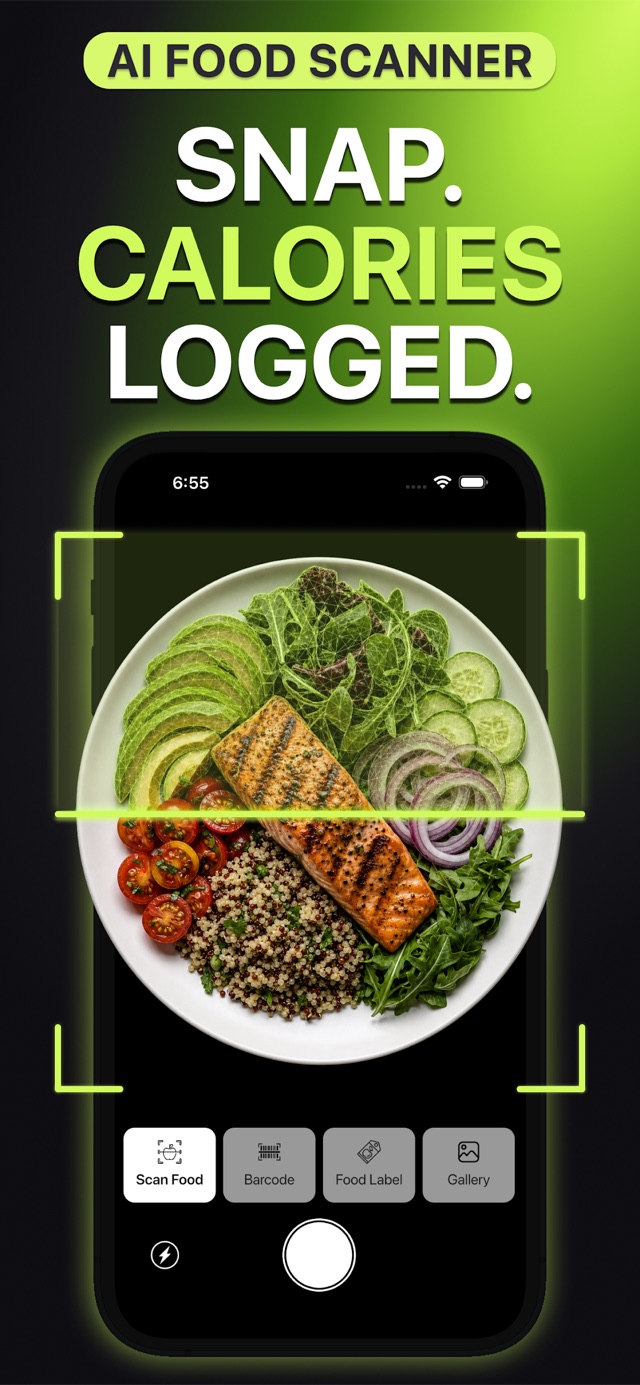
Log the plate in one photo before the first bite.
The menu tells you where the fat is
Restaurant menus are written to sell food, and the vocabulary is consistent enough to read as a signal. Fried, crispy, breaded, creamy, smothered, glazed and buttery all mean the same thing for your purposes.
Grilled, roasted, steamed and poached point the other way. None of this is a rule about which dish to order, only a way to guess which of two unlabelled plates is the heavier one.
Count the things that arrive uninvited
The main course is usually the part people log correctly. The bread basket, the oil it is dipped in, the dressing already on the salad and the second drink are the ones that go unrecorded.
Dressing is worth singling out. A salad ordered as the lighter option can arrive carrying 300 calories of it. Asking for it on the side turns an unknown into something you control.
Trade the dish before you order it
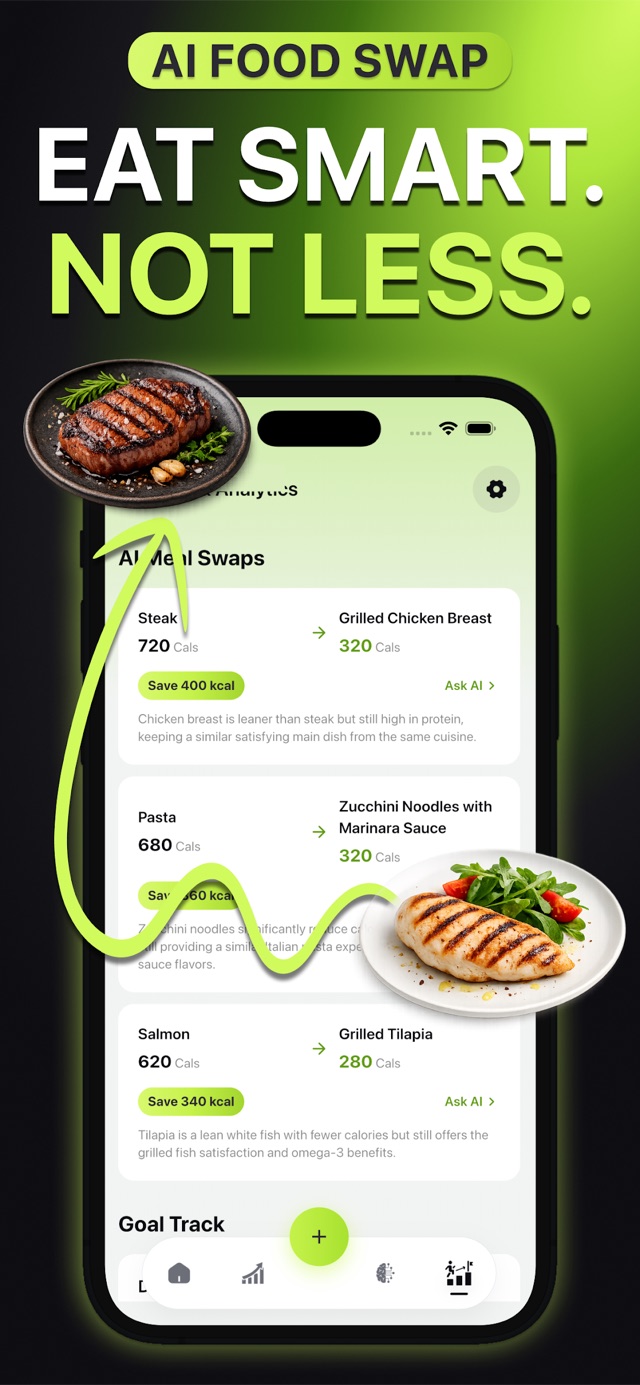
The cheapest calories to save are the ones you never order. MyPlate suggests swaps that keep the cuisine and the role of the dish rather than telling you to eat a salad.
Grilled chicken breast at 320 calories in place of steak at 720 saves 400. Zucchini noodles with marinara at 320 instead of pasta at 680 saves 360. Grilled tilapia at 280 rather than salmon at 620 saves 340. Each one is still a main course.
Questions
How accurate are the calorie counts printed on menus?
They are averages, and studies comparing lab-tested meals against posted figures regularly find dishes running over the stated number. Treat published counts as a good anchor rather than an exact measurement, and round up when a dish arrives visibly larger than the photo suggested.
What should I log if I did not finish the plate?
Log the fraction you ate, judged against the plate rather than the menu portion. Half a 900 calorie dish is 450. Being roughly right about a portion you actually finished is more useful than logging the full amount and quietly deciding the day is ruined.
Keep reading
How to Track Calories Without Weighing Food
Track calories without a food scale using hand portions, photo logging and label servings. What each method costs you in accuracy.
How to Track Macros for Beginners
Turn a calorie target into protein, carb and fat targets in grams, then track what is left each day rather than what you ate.