How to Calculate Calories in Homemade Food
To calculate calories in homemade food, add up the calories of every raw ingredient you put in the pot, then divide the total by the number of servings. When portions are uneven, weigh the finished dish instead and work out calories per gram, then multiply by the weight of your own serving.
Add up the ingredients, not the dish
A finished casserole is not in any food database, but every ingredient in it is. That is the whole method: cost out the parts, then split the result.
Work from raw weights. Nutrition data for meat, grains and vegetables is compiled on raw ingredients, and cooking changes weight without changing the calories that went in.
The formula for uneven portions
Dividing by servings assumes everyone gets the same amount, which is rarely true of a shared pot. Weighing the finished dish solves it.
Weigh the cooked dish, including nothing but the food. Divide the recipe total by that weight to get calories per gram, then multiply by whatever lands on your plate. A 2,400 calorie chilli weighing 1,600g is 1.5 calories per gram, so a 350g bowl is 525 calories.
Cooking does not burn calories off
Water evaporates, fat renders, and the dish gets lighter. The calories do not leave with the steam. This is why a cooked weight logged against a raw database entry reads low, and why the same dish can look different on two days depending on how long it sat on the heat.
The exception worth counting is fat that genuinely leaves the pan and gets poured away. If you drain it, do not log it.
Oil is the ingredient people forget
Recipes list two tablespoons of olive oil in the same tone they list a pinch of salt, and one of those is about 240 calories. In a dish serving four, that is 60 calories a portion hiding in plain sight.
Butter, cream, dressings and anything used to fry deserve the same treatment. They are the reason a homemade meal that "should" be light comes out heavier than the restaurant version.
The faster route: photograph the plate
Costing a recipe out by hand is worth doing once for meals you cook often. For a one-off dinner it is more arithmetic than the answer justifies.
MyPlate reads a photo of the plated food and returns calories and macros for what it recognizes. For mixed dishes it is an estimate rather than a calculation, but it is an estimate you will actually make on a Tuesday night.
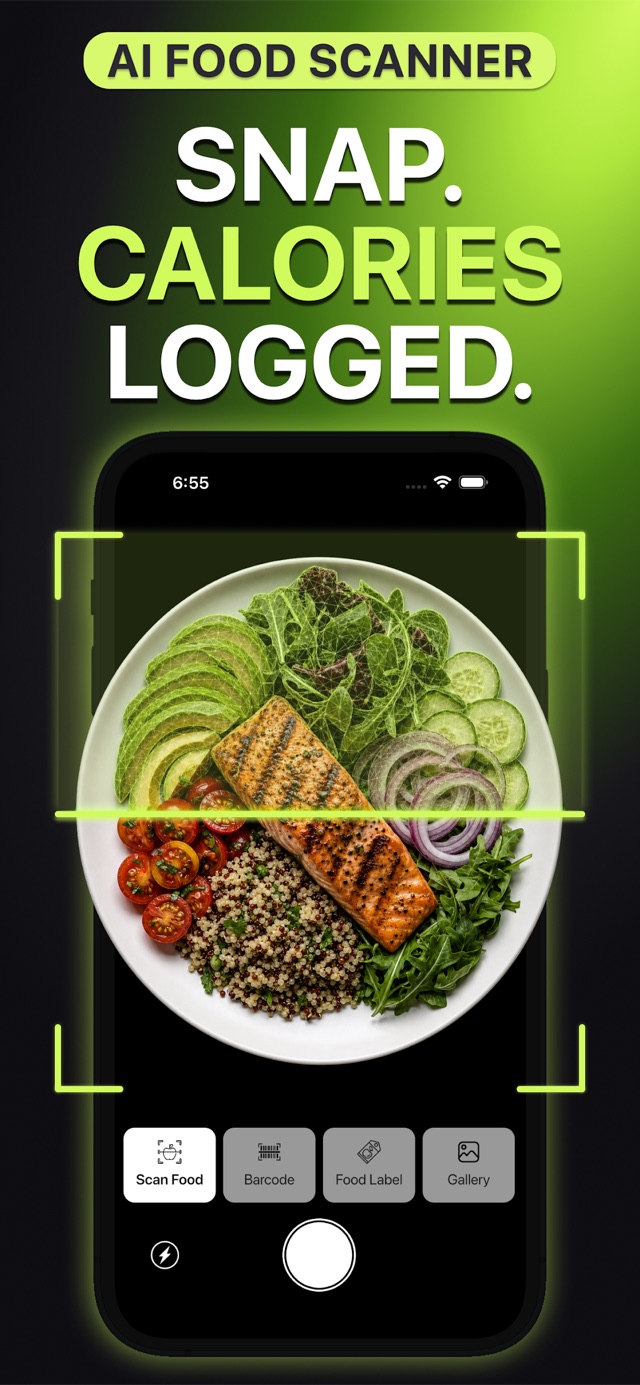
Photograph tonight’s dinner instead of costing out the recipe.
Cost it once, reuse it forever
The real return on the ingredient method comes from repetition. Most people cook the same eight or ten dinners on rotation.
Work out the per-serving number once, save it, and every future portion is a two-second log. The hour you spend on your regular meals covers most of what you eat for the rest of the year.
Questions
Does cooking change the number of calories in food?
Barely. Cooking removes water and can render out fat, which changes the weight but not the energy that went into the pot. Log raw weights against raw database entries, or weigh the finished dish and work in calories per gram. The exception is fat you drain off and throw away, which you can leave out.
How do I count calories in a recipe when everyone takes a different amount?
Weigh the whole cooked dish and divide the recipe total by that weight to get calories per gram. Multiply by the weight of your own serving. This is more accurate than dividing by servings whenever portions are not identical, which for a shared pot is most of the time.
Keep reading
How to Track Calories Without Weighing Food
Track calories without a food scale using hand portions, photo logging and label servings. What each method costs you in accuracy.
How to Track Macros for Beginners
Turn a calorie target into protein, carb and fat targets in grams, then track what is left each day rather than what you ate.